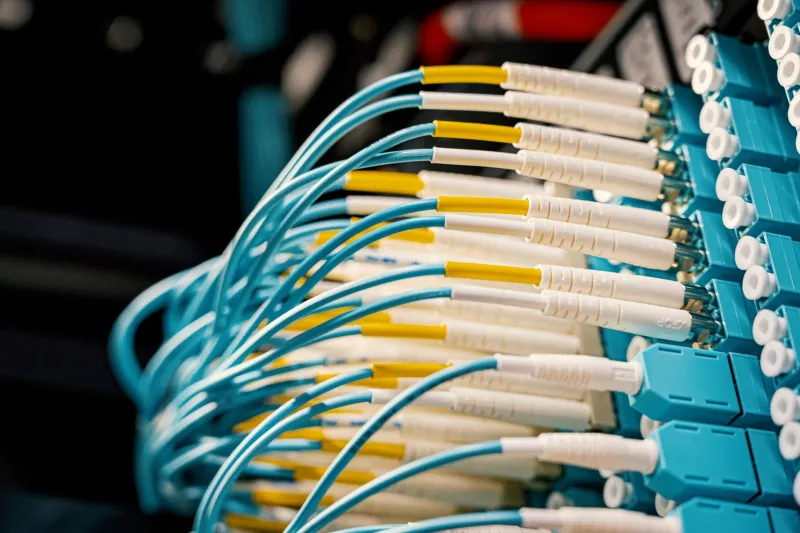
Between the Nodes: The Transfer Moment Where Distributed Grids Quietly Fail
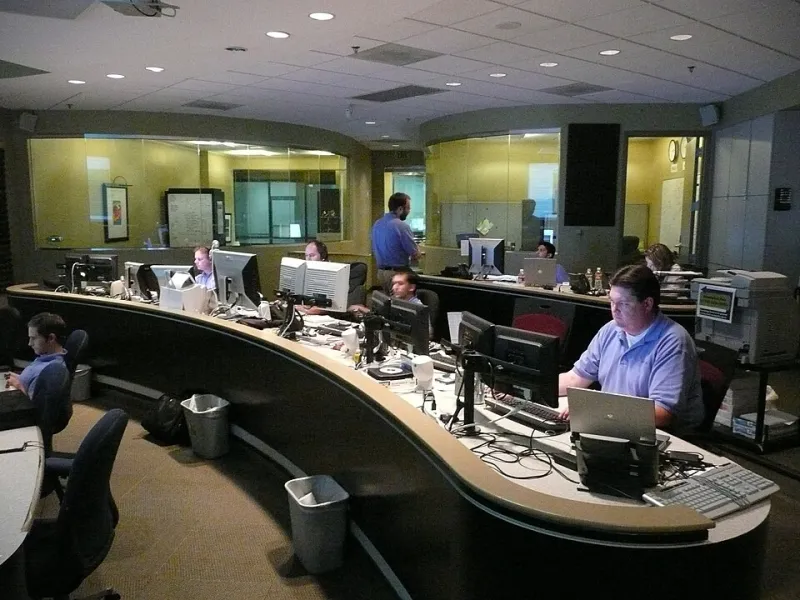
Photo: Mike Reyher, CC BY 2.0, via Wikimedia Commons
Ask an infrastructure team in Dallas or Des Moines where their relay network is most likely to fail, and the answers cluster around hardware: disk latency, memory pressure, NIC saturation. Post-incident reviews tell a different story. Across a decade of public postmortems from major US carriers, CDN operators, and grid-computing platforms, a disproportionate share of cascading failures begins not inside a node, but between two of them — in the narrow window during which responsibility for a session, a payload, or a computational task changes hands.
The industry has a name for everything except this moment. We call it the transfer seam, and it deserves more engineering attention than it gets.
Why the Seam Is Structurally Weaker Than the Node
A relay node in steady state is a well-understood object. It has resource monitors, health checks, autoscaling policies, and often a dedicated on-call rotation. The transfer seam has none of that institutional scaffolding. It is a transient condition — typically measured in milliseconds — during which two nodes briefly share partial ownership of state that neither fully controls.
That shared ownership is the vulnerability. Consider a common pattern: node A is draining traffic ahead of a maintenance window in an Ashburn data center, shifting sessions to node B in Chicago. During the overlap, a client retry can reach A while B has already accepted ownership of the session state. A responds from stale context; B responds with authority. The client sees an inconsistent protocol exchange, times out, and retries aggressively — and the retry storm begins.
The failure is not that either node was unhealthy. It is that the transition protocol left a window where accountability was ambiguous.
Three Failure Patterns That Recur Across Topologies
Reviewing incident data and postmortem archives, three handoff pathologies appear again and again.
The double-accept. Both the source and destination nodes acknowledge the same request during an overlap window. Idempotency keys help, but only if the key scope survives the transfer. Many implementations scope keys per-node, which renders them useless precisely when a handoff is underway.
The orphaned lease. Distributed leases are the standard mechanism for transferring ownership, yet lease expiry clocks frequently drift out of sync across regions — a problem this publication has covered before. When node A's lease expires a few hundred milliseconds before node B's begins, there is a gap in which no node owns the resource, and queued work evaporates silently.
The half-migrated state. State transfer that ships incrementally — session chunks, routing tables, cache warm data — can be interrupted mid-stream. Without a commit marker, the destination node cannot distinguish a complete transfer from a partial one, and it begins serving traffic against incomplete state.
Engineering the Transition, Not Just the Endpoints
The remedy is a shift in investment. Most teams spend their reliability budget on node resilience — redundant power, multi-AZ deployment, hardware failover — and treat transition mechanics as an implementation detail. The better allocation inverts that.
First, make handoffs explicit and first-class. A two-phase transfer protocol — a prepare phase in which the destination node confirms capacity and state readiness, followed by a commit phase with an atomic ownership marker — eliminates most double-accept scenarios. The cost is a few extra round trips, which is negligible against the cost of a retry storm.
Second, externalize the ownership record. Leases and commit markers should live in a quorum-backed store, not in node-local memory, so that the question "who owns this session?" always has exactly one correct answer, verifiable by either participant or an observer.
Third, instrument the seam itself. Handoff duration, handoff failure rate, and post-handoff error deltas deserve their own dashboards. A node can be 99.99% healthy while its transfers are failing one time in fifty — and no existing metric will surface it.
The Budget Argument
There is a tempting objection: transfers are rare, so why optimize them? But rarity is deceptive. Every rolling deployment, every autoscaling event, every regional failover drill multiplies transfer volume. A network that performs a thousand handoffs per second during a routine redeployment is running a million transfer events in under twenty minutes. Low per-event failure rates compound into near-certainty at that scale.
Node resilience protects against the failures we fear. Transition engineering protects against the failures we actually have. The relay networks that hold up under stress — the ones that survive Super Bowl surges and Black Friday traffic without incident — are, almost without exception, the ones whose engineers stopped treating the handoff as someone else's problem.