Built to Bend: Five Distributed Systems That Absorbed the Unthinkable — and the Traits They Share
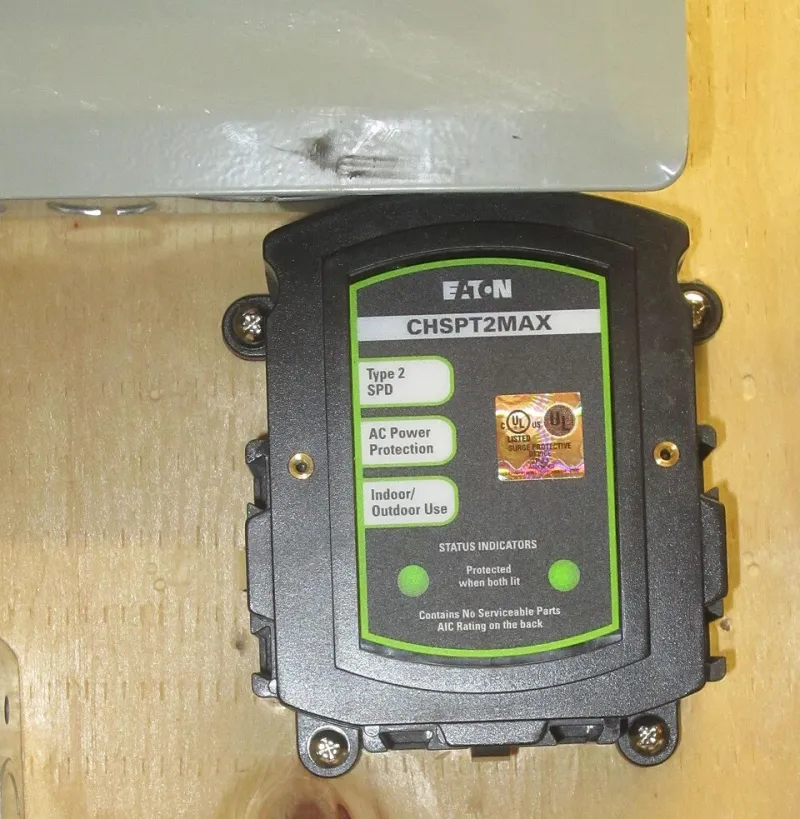
Photo: Wtshymanski, CC BY-SA 3.0, via Wikimedia Commons
Every infrastructure team has a load test. Almost none of them resemble what actually happened on the nights that matter — the election-night traffic surges, the emergency alert storms that propagate across carrier networks in seconds, the retail events that multiply normal load by forty-fold with no warning. Those are black swan events: not merely high traffic, but misshapen traffic, arriving in patterns no capacity plan anticipated.
Most relay topologies fail under such conditions. A handful do not. Drawing on published postmortems, engineering blogs, and incident disclosures from US-based operators, we examined five distributed systems that absorbed black swan traffic without cascading failure. Their architectures differ. Their instincts do not.
1. The Content Network That Shed Load Before It Choked
A major US content delivery operator faced a viral live event that produced a tenfold spike against a single origin cluster within ninety seconds. The system survived because of what it refused to do: it never admitted traffic it could not serve. Edge admission control — a token-bucket gate at every relay — rejected excess requests with fast, cheap responses rather than letting them queue into memory exhaustion. Rejection at the edge is a feature. Rejection at the origin is an outage.
2. The Messaging Fabric With Three Gears
A national messaging platform weathered an emergency-alert cascade by degrading deliberately. Its architecture defines three service tiers — full delivery, best-effort delivery with relaxed ordering, and acknowledgment-only receipt — and traffic controllers shift tiers dynamically under pressure. Users noticed slower messages. They did not notice a blackout. The lesson: graceful degradation is a designed artifact, not an emergent one. Teams that define their degradation ladder before the incident are the teams that survive it.
3. The Compute Grid That Let the Edge Decide
A distributed computing platform processing bursty scientific workloads avoided collapse during a coordinated submission storm because rate shaping was decentralized. Rather than a central throttle — a single point of both failure and contention — each regional relay enforced locally derived limits based on its own queue depth and downstream health. No global coordinator to saturate, no shared state to stampede. The storm was absorbed in a thousand small, local decisions.
4. The Financial Relay That Kept a Reserve
A payment relay network operating under strict US regulatory uptime requirements survived a market-event spike by running deliberately over-provisioned anchor nodes — capacity held in reserve not for average load but for the worst hour of the quarter. The economics look wasteful on a spreadsheet and brilliant at 2:47 PM on a volatile trading day. Headroom is insurance, and insurance is not waste.
5. The CDN That Failed Fast, Recovered Faster
During a major streaming premiere, one operator's topology avoided cascading failure through aggressive circuit breaking. Relay nodes that detected downstream saturation severed connections immediately rather than proxying timeouts upward. Fast failure contained the blast radius; automated re-registration restored capacity within minutes. The counterintuitive insight: the system stayed up because its components were willing to go down — briefly, locally, and on purpose.
The Common Blueprint
Strip away the vendor names and five traits recur:
- Admission control at the boundary. Decide early, decide cheaply, and never let unbounded work into the core.
- A pre-defined degradation ladder. Know which capabilities you surrender first, and in what order, before the surge forces the choice.
- Decentralized rate shaping. Push throttling decisions to the edges where the data lives, avoiding coordinator bottlenecks.
- Held reserve capacity. Provision for the tail, not the mean.
- Fast, local failure. Circuit break everywhere; recover automatically.
None of these traits require exotic technology. They require conviction — the willingness to reject traffic, degrade service, and buy idle capacity in exchange for surviving the day the graph goes vertical. For teams building relay infrastructure in 2025, that checklist is the closest thing to a survival guarantee the discipline offers.