Stop Chasing Symmetry: The Case for Deliberately Lopsided Relay Topologies
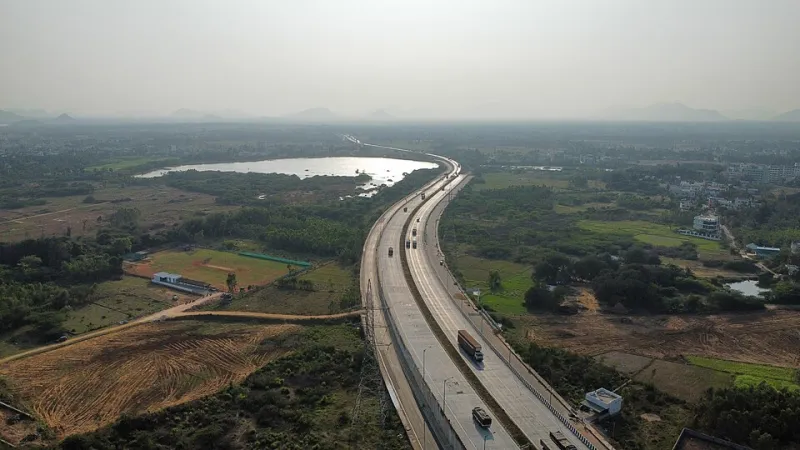
Photo: Saiphani02, CC BY-SA 4.0, via Wikimedia Commons
Somewhere in every infrastructure organization there is a capacity dashboard with a heat map, and somewhere in every architecture review someone points at that heat map and says the word imbalance as though they've found a tumor. The assumption is old, widespread, and — in my experience across continental US deployments — mostly wrong.
Balanced relay capacity is not a gold standard. It is a aesthetic preference dressed up as an engineering principle, and it is time we retired it.
Where the Dogma Came From
The case for symmetry is not stupid; it is outdated. Early distributed systems failed catastrophically from hotspots: one overloaded node would slow, time out, shed its work onto neighbors, and trigger the cascade. The obvious corrective was balance — spread load evenly, and no node ever becomes the weak point. Textbooks codified it. Monitoring vendors sold it. A generation of engineers internalized it.
But the hotspot failures of that era stemmed from accidental imbalance — load concentrating on nodes that were provisioned identically to their peers. The remedy for accidental imbalance is not enforced uniformity. It is intentional asymmetry.
What Uneven Networks Do That Fair Ones Can't
Consider the actual traffic geography of the United States. Northern Virginia, the Dallas–Fort Worth corridor, and the Bay Area are not merely busy; they are structurally busy, terminus points for the majority of domestic backbone traffic. A relay topology that allocates capacity as though Boise and Ashburn were equivalent is not balanced — it is blind.
In deployments I've reviewed, deliberately uneven topologies outperform homogeneous ones on the metrics that matter. Over-provisioned anchor nodes in high-traffic regions absorb surges locally, preventing the eastward-and-back traffic sloshing that balanced designs induce. Anchors also serve as stabilization points during incidents: when a regional failure occurs, a fat anchor can temporarily absorb displaced load, buying operators minutes instead of seconds. Thin, uniform networks have no such shock absorbers.
There is an operational dividend, too. A topology with a handful of heavyweight anchors and many lightweight satellites is legible. On-call engineers can reason about seven critical nodes far more reliably than about four hundred equivalent ones.
Designing Asymmetry Without Inviting Disaster
The legitimate fear is that intentional imbalance becomes accidental imbalance — that today's anchor becomes tomorrow's hotspot. That failure mode is real, and it is manageable with discipline.
Provision anchors at multiples, not margins. An anchor node should carry 3–5x its expected peak, not 1.2x. The excess is the shock-absorption capacity that makes the whole design work.
Make the hierarchy explicit in routing. Asymmetry fails when the routing layer pretends all nodes are peers. Satellites should preferentially hand off to anchors; anchors should shed to one another along pre-defined corridors, never randomly.
Instrument the anchors obsessively. Concentrated risk demands concentrated visibility. Anchor saturation should page someone long before satellite nodes notice anything.
Plan the anchor's funeral. Every anchor needs a documented evacuation path — which neighbor absorbs its load, how traffic migrates, how long it takes. An anchor without an evacuation plan is not architecture; it is a liability with good specs.
The Honest Trade
Uneven topologies cost more in concentrated hardware and pay it back in resilience, legibility, and latency. They are harder to diagram and easier to operate. They will not pass a naive balance audit, and they should not try.
The networks that serve American traffic well are not the fairest ones. They are the ones honest enough to admit that traffic was never fair to begin with — and built accordingly.