Crypto Agility Before the Qubit: A 2026 Post-Quantum Migration Plan for Relay Authentication
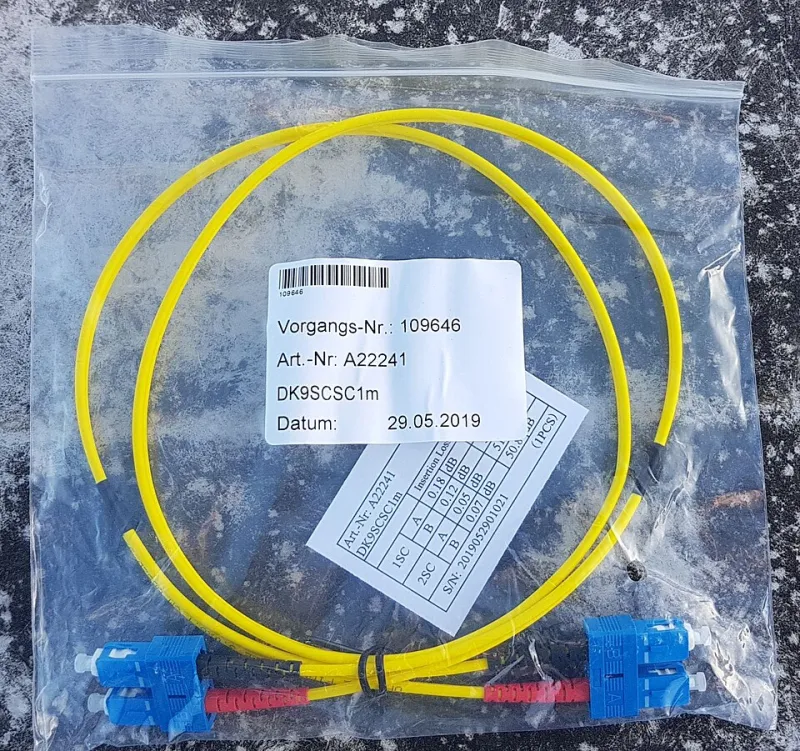
Photo: Asurnipal, CC BY-SA 4.0, via Wikimedia Commons
Relay networks are conservative by necessity. Authentication chains, certificate authorities, hardware security modules, and embedded node firmware are built to last through refresh cycles measured in years, not quarters. That conservatism is usually a virtue. Against quantum computing, it becomes a liability. The cryptographic primitives that underpin relay authentication today were selected for a world in which factoring large integers and solving elliptic-curve discrete logarithms remained impractical. That assumption is no longer a safe planning baseline.
Why the Timeline Is Shorter Than It Looks
The useful question is not whether a cryptographically relevant quantum computer will arrive in 2026. It will not. The useful question is when relay operators need to have migration machinery in place so that a late-decade or early-2030s breakthrough does not become an operational emergency. For long-lived infrastructure, the answer is now.
Two pressures make the calendar uncomfortable. First, encrypted traffic captured today can be stored and attacked later. Relay control channels, management sessions, and authentication exchanges may carry long-lived credentials and topology information that remains sensitive for years. Second, relay fleets are physically distributed and slow to update. A single firmware change may require maintenance windows, field technicians, vendor coordination, and rollback planning. Organizations that begin in 2029 will not be migrating; they will be triaging.
What Changes for Relay Authentication
The National Institute of Standards and Technology finalized its first post-quantum standards in 2024: ML-KEM for key encapsulation, ML-DSA for digital signatures, and SLH-DSA as a hash-based signature alternative. These are not drop-in replacements for every RSA or ECC use case. They change key sizes, signature sizes, handshake behavior, and hardware requirements.
For relay networks, the most sensitive surfaces are the control plane, node-to-node authentication, administrative access, and software distribution. A relay node that cannot verify the authenticity of a configuration update is not merely degraded; it is a potential injection point. A management session that can be decrypted later may expose topology, credentials, and failover logic. The migration therefore has to prioritize identity and control traffic over bulk data where feasible.
Constrained relay hardware deserves early attention. Larger public keys and signatures can stress low-bandwidth links, fixed-size buffers, and embedded processors. Handshake latency may rise during hybrid transition periods. Certificate chains may exceed conservative MTU assumptions. None of these problems is unsolvable, but each one needs to be measured on real equipment rather than assumed away in a laboratory.
A Phased Migration That Preserves Operations
The pragmatic path is hybrid, incremental, and observable. Hybrid key exchange allows classical and post-quantum algorithms to operate together so that a failure in one does not collapse the session. Hybrid certificates and dual-signature approaches can preserve compatibility while post-quantum trust anchors are introduced. The goal is not to declare a winner in 2026; it is to build the ability to change algorithms without rebuilding the network.
Start with a cryptographic inventory. Record every algorithm, key length, certificate lifetime, library version, hardware module, and vendor dependency in the relay estate. Include operational technology, out-of-band management, and software supply-chain signing, not just customer-facing TLS. The inventory will almost certainly reveal more RSA than expected and more places where no one knows who owns the key.
Next, establish crypto agility as an architectural requirement. That means abstracted cryptographic interfaces, algorithm identifiers that can be negotiated, certificate-management workflows that support multiple trust anchors, and firmware update paths that can carry larger objects. It also means contract language. Relay operators should require vendors to disclose post-quantum roadmaps, support hybrid modes, and provide update timelines for embedded components that may remain in service for a decade.
Pilot before mandating. Select a small set of relay sites that represent the fleet: a high-capacity core node, a constrained edge site, a management gateway, and a hardware security module deployment. Measure handshake latency, CPU cost, memory pressure, packet fragmentation, and failover behavior under hybrid cryptography. Test rollback. Test what happens when one side supports post-quantum algorithms and the other does not. The migration plan should be written by operators who have watched a real node struggle with a larger certificate chain.
The 2026 Action List
For the remainder of 2026, four actions are defensible. First, complete the inventory and assign ownership for every cryptographic dependency. Second, add hybrid post-quantum key exchange to a controlled pilot in the management and control planes. Third, require crypto-agility clauses in new and renewed vendor contracts. Fourth, publish an internal migration sequence that prioritizes authentication and software integrity before bulk transport.
This is not a call for emergency replacement. RSA and ECC will remain in relay networks for years, and hybrid designs are specifically intended to bridge that period. The risk lies in treating post-quantum cryptography as a future procurement item rather than a present engineering constraint. Relay networks endure because they are designed for failure. The same discipline now applies to cryptographic failure. Waiting is not a neutral choice; it is an unhedged bet on someone else's timeline.