Paper Barriers: Seven Lease Terms That Decide Whether a Relay Site Survives an Outage
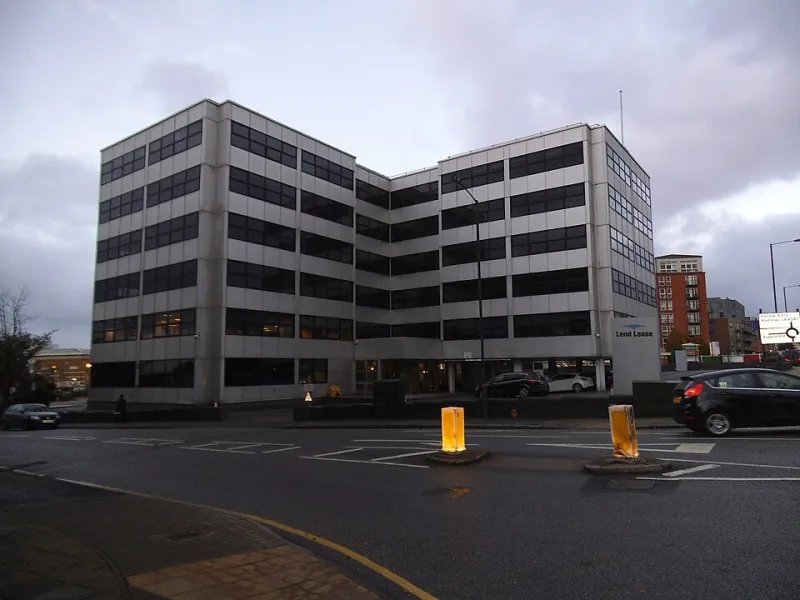
Photo: David Howard , CC BY-SA 2.0, via Wikimedia Commons
A few years ago a relay operator in the Mid-Atlantic discovered during a fiber cut that its two supposedly diverse paths entered the building through the same conduit vault. Both were severed by the same contractor. The network design was sound. The lease exhibit, which granted a right of entry for exactly one pathway, was not.
That is the pattern worth internalizing: facilities and procurement decisions set hard limits on reliability long before an engineer configures a single route policy. Lease renewal is the moment when those limits are negotiable. It is also the moment when most network teams are absent from the room.
Why the Contract Belongs in the Architecture Review
Routing policy is reviewed, versioned, and tested. Leases are signed by real estate and filed. Yet a lease determines whether a site can hold a second utility service, whether staff can reach the rack at 2 a.m., and whether the operator may install backup power at all. Those are architectural constraints in every meaningful sense, and they deserve the same scrutiny as a BGP community design.
Treat the renewal cycle as a design review with a deadline. The following seven questions should be answered in writing before signature.
1. Does the lease guarantee a second utility service, and who pays for it?
Many leases grant power capacity without granting the right to a second, independently routed service. Ask whether the landlord will permit an additional service entrance, whether the utility has capacity at the building, and who bears the construction cost if a new feeder is required. Confirm that the answer is in the document rather than in a facilities manager's recollection.
2. What are the generator and fuel rights?
If the site depends on backup generation, the lease must permit it — rooftop or pad, emission compliance included, fuel storage and refueling access specified. Clarify who owns the generator, who tests it, and whether the testing window is compatible with relay traffic. A generator that can only be tested during a maintenance window the operator cannot schedule is a generator of uncertain state.
3. How many fiber pathways are actually permitted, and where do they enter?
Diversity claims need physical verification. Ask for the number of permitted entry points, the conduit paths allowed, and any restrictions on adding carriers. Where possible, obtain a drawing. Two carriers sharing one vault is one path with two invoices, and the lease is the instrument that either allows or blocks the fix.
4. What are the access rights during a regional emergency?
Badge hours, escort requirements, and after-hours procedures read like administrative boilerplate until a utility outage shuts down a metro and the on-call engineer cannot get past the lobby. Negotiate 24/7 unescorted access for named staff, a documented emergency escalation path, and a guarantee that emergency access is not gated by the landlord's staffing levels.
5. Are antenna, rooftop, and out-of-band rights preserved?
Out-of-band management and backup RF links often need roof space, riser access, or a small antenna. Confirm that the lease grants these rights explicitly and that a future building modification cannot eliminate them. Also confirm the operator's right to install a cellular modem or satellite terminal for management traffic, which increasingly matters when primary circuits fail.
6. What remedy exists if the landlord fails to perform?
Service credits are not the same as operational remedies. If the cooling plant fails or the generator is out of service for a month, rent abatement is cold comfort when the node is carrying quorum. Ask for defined performance obligations, notification duties, and a termination right tied to persistent facilities failure. Then ask who actually answers the phone at 3 a.m.
7. What happens at exit?
Decommission terms shape reliability in ways that are easy to miss. Confirm the removal window for equipment, the restoration obligations, the disposition of cross-connects and assigned fiber, and whether the operator can extend occupancy briefly if a migration slips. A rushed exit under penalty is exactly how orphaned relay hardware ends up powered on in a cage nobody monitors.
Turning Answers Into Renewal Terms
Score each question on a simple three-point scale: satisfied, ambiguous, or blocked. Any blocked item that touches power, access, or path diversity should be treated as a defect with an owner and a remediation date, not a note for next cycle.
The highest-leverage move is procedural. Put a network engineer and a security representative on the renewal review alongside real estate, with authority to redline. Require that the site catalog record the lease-derived attributes — utility feeds permitted, entry pathways, access model, generator rights — so the information survives staff turnover.
Build the Calendar Backwards
Renewal negotiations go badly when they start late. Work backwards from the expiration date and set a milestone roughly nine months out for the engineering review, six months for redlines, and three months for signature. Sites with long lead times on utility construction need more room still.
None of this is glamorous work. But the second fiber path, the 3 a.m. badge, and the generator that can actually be tested are all granted or withheld on paper first. Operators who treat the lease as a network component tend to discover their resilience in the architecture review, where it is cheap, instead of in the conduit vault, where it is not.